

Clip two TENS pads on a forearm and the muscle twitches under them. Surround that same forearm with two plates carrying 27,120,000 cycles every second and nothing twitches at all. The patient reports warmth and little else. That quiet behaviour defines short wave diathermy, and it leaves a fair question hanging: if the current stimulates nothing, what is it actually doing to the tissue?
Heat without a twitch: what a short wave diathermy machine does
The name gives the first clue. Diathermy comes from Greek roots meaning "through heat", and a machine for short wave diathermy is a radiofrequency generator built to put heat into tissue below the skin surface.
Short wave diathermy (SWD) is an electrotherapy modality that passes radiofrequency energy, usually at 27.12 MHz and an 11.06 m wavelength, through body tissue. Continuous output produces deep heating. Pulsed output produces very little heat. The energy enters either as an electric field between two electrodes or as a magnetic field from a coil.
My own turning point came when a lab instructor pointed out that the patient is a component of the circuit. That one remark changed how I read every control on the panel. Work through this section and the next two, and you should be able to say which tissues each field reaches and what the pulse setting does to the heat.
Inside the cabinet sit two circuits. The machine circuit holds the oscillator and amplifier that make the 27.12 MHz signal. The patient circuit holds a resonator coil, a variable capacitor, the electrodes, and the treated tissue itself. Clayton's Electrotherapy, edited by Forster and Palastanga, lays out two routes for the energy to reach the patient: an electrostatic field from a condenser, or an electromagnetic field from a cable or coil.
Both routes depend on tuning. Tuning means adjusting the variable capacitor until the patient circuit resonates with the machine circuit, which gives maximum energy transfer. Older units have a knob and a meter that you peak by hand, and many modern machines search for resonance automatically. Skip the step and the dial reads "on" while the tissue receives little. Every limb tunes differently, because every limb has a different size, shape, and water content.
Before comparing the two routes, one physics puzzle needs settling: why a 27 MHz field warms tissue yet never makes a muscle twitch.
Why does 27.12 MHz warm tissue but never stimulate a nerve?
Start with three numbers. The frequency is 27,120,000 cycles per second. The wavelength is the speed of light divided by that frequency, about 300,000,000 ÷ 27,120,000 = 11.06 m. One full cycle lasts roughly 37 nanoseconds.
Now set that against a nerve. A motor nerve needs a current pulse lasting a good fraction of a millisecond before its membrane depolarises, and TENS machines use pulses of roughly 50 to 250 microseconds. Each half-cycle of the diathermy current ends in under 20 nanoseconds, thousands of times shorter than any pulse a nerve can follow. The membrane never gets time to react, so the field heats tissue without stimulating it.
So where does the heat come from? Imagine a crowded corridor where everyone must shuffle one step left, then one step right, 27 million times a second. Nobody travels anywhere, yet everyone keeps bumping into neighbours, and the bumping turns into heat. Ions in tissue behave this way. Polar molecules such as water keep flipping to follow the reversing field. Textbooks usually list ion oscillation, dipole rotation, and distortion of non-polar molecules as the heating routes, and the inductive method adds eddy currents (small circular currents induced inside the tissue).
The frequency has a practical origin too. Kitchen's Electrotherapy: Evidence-Based Practice (11th edition) treats 27.12 MHz as the standard therapeutic frequency, and the choice keeps machines inside a band set aside for industrial, scientific, and medical equipment so they don't jam radio communication. Rarer units use 13.56 MHz (22 m) or 40.68 MHz (7.5 m).
How hot does tissue get? Teaching summaries often quote a muscle temperature rise of 4 to 6 °C at 4 to 5 cm depth at clinical energies, with a larger rise in subcutaneous fat. Treat those figures as ballpark numbers, because they shift with field type, spacing, and power, and check which values your own textbook prefers.
The confusion most people carry
"Short wave" names a radio band, with wavelengths of 3 to 30 m. It says nothing about how deep the heat goes. Depth depends on the field type, the electrode spacing, and how strongly each tissue resists current. A student who links short wavelength to shallow heating will lose marks on every depth question.
With the physics settled, the practical question is how the field gets in. There are two ways, and they favour different tissues.
Two fields, two heating patterns
In the condenser field method (also called the capacitor method), the treated part sits between two electrodes. Electrodes and tissue together form a capacitor, and the field between the plates is electric. Its strength depends on electrode size, the distance between the plates, and the tissue in between. Tissues that resist current, such as skin and fat, take a large share of the heating. A thin air gap keeps the field crowded into the superficial layers, and a wider gap lets it spread deeper.
Arrangement matters as much as spacing. With plates on opposite sides of a limb (contraplanar), the field crosses the whole thickness. With plates side by side on the same surface (coplanar), the field arcs through shallow tissue only. A cross-fire layout uses two pairs of plates so the fields overlap at a chosen depth.
The inductive field method works differently. A coil carries the alternating current, and the patient sits in the magnetic field around it. The coil can be a cable wound around the part, a flat applicator called a monode, or a drum with two wings called a diplode. A changing magnetic field induces eddy currents in the tissue, and their strength depends on the field at that spot and on the tissue's conductivity. Muscle and blood are rich in water and electrolytes, so they conduct well and heat well. Fat conducts poorly and heats less. The field also weakens steeply with distance from the applicator, so applicator position changes the dose. One common way textbooks describe a cable is that its ends carry a stronger electric field and its centre a stronger magnetic one.
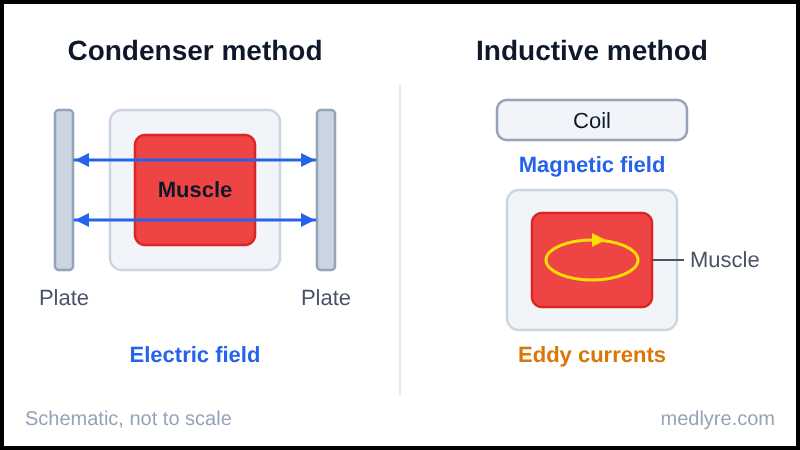
Figure 1 shows the contrast at a glance. The table puts the same contrast in revision form.
| Feature | Condenser (capacitor) method | Inductive (coil) method |
|---|---|---|
| Field doing the work | Electric field between two plates | Magnetic field around a coil or drum |
| Patient's role | Tissue sits between the plates and forms part of the capacitor | Tissue sits in the field and carries induced eddy currents |
| Tissues heated most | Layers that resist current, such as skin and fat | Water-rich, conductive tissue such as muscle |
| Depth control | Plate spacing, air gap, electrode size, arrangement | Applicator type and distance, since the field weakens quickly |
| Common applicators | Air-space plates or pad electrodes | Cable, monode, diplode (drum) |
The viva trap here
Examiners love the question "which method heats muscle selectively?" Anchor it with one chain: inductive means magnetic field, magnetic field means eddy currents, and eddy currents favour water-rich muscle. Condenser means electric field, and that favours layers that resist current.
Both fields can run continuously or in bursts, and that second choice changes the whole purpose of the machine.
How can a heating machine be set to warm nothing?
Continuous mode keeps the field on, so heat builds steadily. Pulsed mode sends short bursts of 27.12 MHz and then pauses. During each pause, blood flow and conduction carry heat away before the next burst arrives. Make the pauses long enough and the tissue never warms.
The number that decides this is mean power. Peak power is what the machine delivers inside a burst, and mean power is peak power multiplied by the fraction of time the burst is on (pulse width × pulse rate). Take an illustrative machine with 1,000 W peak, 400 µs pulses, and 100 pulses per second. The field is on for 400 × 10^-6 s × 100 = 0.04 of each second, so mean power is 40 W. A thousand-watt burst, yet the tissue sees the average of a bright light bulb.
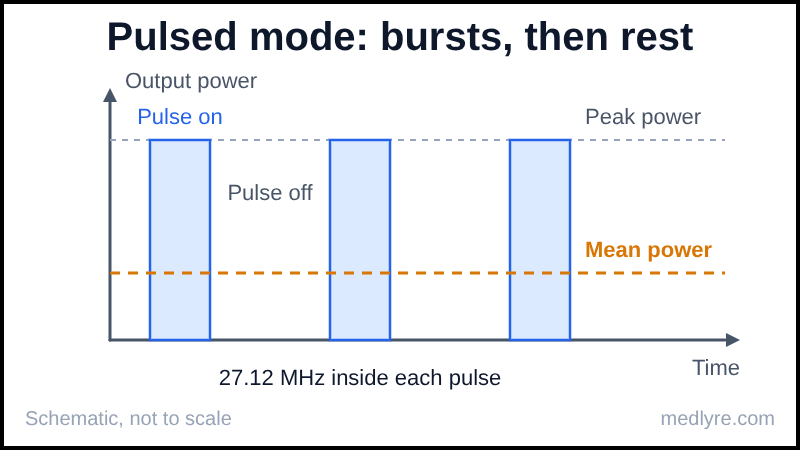
Figure 2 exaggerates the burst length so you can see the idea. Real duty cycles are often much smaller, as the arithmetic above shows.
The thermal versus athermal split has been argued in the literature for decades, and Kitchen and Partridge's 1992 review of continuous and pulsed patterns in Physiotherapy is an early reference point. Pulsed output aims to deliver electromagnetic energy with little heating, and the benefits proposed for it, such as reduced swelling and faster healing, are called non-thermal. The mechanism behind them is still debated, so exam answers should hedge.
What happens if a fresh, swollen, warm joint is treated with continuous mode at a strong dose? The heat widens local blood vessels and speeds blood flow, which can feed the swelling, and classic teaching reserves low-heat or pulsed settings for the acute stage. That single logic explains most of the mode-selection questions you will meet.
Now the dose. The dial on the machine shows power, and dose follows what the patient feels. Many textbooks teach a four-grade scale, often credited to Schliephake.
| Grade | What the patient feels | Usual textbook pairing |
|---|---|---|
| I | No sensation of warmth | Acute stage, pulsed or low mean power |
| II | Faint, just-perceptible warmth | Subacute stage |
| III | Definite, comfortable warmth | Subacute to chronic stage |
| IV | Strong warmth, still tolerable | Chronic conditions |
Teaching notes usually quote a continuous session of 20 to 30 minutes. An exam answer on dose should name three things together: the grade, the mode, and the time.
Figure 3 pulls the choices into one decision path, the way a textbook would pair a presentation with a mode and a field.
flowchart TD
    A["Contraindication screen cleared"] --> B{"Tissue state?"}
    B -->|"Acute: heat would add swelling"| C["Pulsed mode, low mean power"]
    B -->|"Chronic: warmth loosens tissue"| D["Continuous mode, warmth dose"]
    C --> E{"Field choice"}
    D --> E
    E -->|"Eddy currents favour water-rich muscle"| F["Inductive: coil or drum"]
    E -->|"Electric field crosses skin, fat, muscle"| G["Condenser: two plates"]
Figure 3: A textbook-style decision path from tissue state to mode and field.
Dose by feel only works when the patient can feel, and that leads straight into the safety map.
Metal, moisture and pacemakers: where the heat goes wrong
Burns head the list of complications. The usual causes are faulty equipment, poor technique, and thin supervision. Each safety habit in the lab traces back to one physical fact: a field heats whatever conducts best, and not always the tissue you meant.
Sweat and wet dressings conduct and concentrate heat, which is why a dry towel sits between skin and applicator to absorb moisture. The patient rests on a wooden couch or chair because metal furniture inside the field would pick up and redistribute energy. The patient stays still so the spacing, and therefore the field, stays constant. The operator also sits in the field's neighbourhood, so texts advise keeping away from the applicators, and pregnant therapists avoid exposure.
Why metal is the problem
Metal conducts far better than tissue, so the field drives strong currents through it and the surrounding tissue takes the heat. A watch strap, a belt buckle, a metal bed frame inside the field, or an implant under the skin can each create a hot spot. That reasoning sits behind the wooden couch, the jewellery check, and the implant question before every session.
A 2002 review of SWD contraindications (abstract page) points out that electrotherapy texts give only broad contraindications and often leave specific scenarios unanswered. Learn the reason behind each item and you can reason through the unlisted cases.
| Item | Why it earns a place on the list |
|---|---|
| Cardiac pacemaker or other implanted electronics | The radiofrequency field can interfere with the device and may damage it |
| Metal in the treated area (implants, jewellery, foreign bodies) | Metal concentrates field and heat around itself; texts differ on how much heating surgical clips produce |
| Pregnancy | Textbooks avoid any chance of heating a developing fetus |
| Malignancy | Extra heat and blood flow in tissue that is growing uncontrollably |
| Impaired skin sensation | Dose depends on the patient reporting warmth, so the safety check disappears |
| Ischaemic tissue or arteriosclerosis | Blood flow carries heat away, and reduced flow lets heat build up |
| Moist dressings and sweat | Fluid conducts and localises heating, creating hot spots |
| Growth plates (epiphyses) | Effects of heating on growing bone are not known with certainty |
Other lists add contact lenses, copper-bearing contraceptive devices, the testes, and active menses, each with a similar reasoning chain.
Does the machine earn its place in the lab? Evidence sits at confidence Level 3. Laufer and Dar's 2012 systematic review and meta-analysis in Osteoarthritis and Cartilage pooled trials of thermal and athermal SWD in knee osteoarthritis and asked whether any benefit depends on heat. The abstract closes by calling for studies with comparable protocols and outcome measures. Fukuda and colleagues compared pulsed shortwave with a placebo device in women with knee osteoarthritis in a multicentre randomised trial published in Physical Therapy in 2011. Doses, modes, and outcome measures differ from trial to trial, so a safe exam answer calls the evidence mixed and asks for further research.
Plates, coils and pulses: the pocket version
Before you close this tab
- Short wave diathermy runs at 27.12 MHz (11.06 m). Each half-cycle is too brief for a nerve to respond, so the sensation is warmth and nothing else.
- Condenser method: electric field between plates, with heat favouring layers that resist current such as skin and fat. Spacing and arrangement steer the depth.
- Inductive method: magnetic field from a cable, monode, or drum, producing eddy currents that heat water-rich muscle most.
- Pulsed mode: mean power equals peak power × pulse width × pulse rate, and the pauses let heat clear.
- Dose follows the patient's perceived warmth on a four-grade scale, and the power dial is only a control.
- Pacemakers, metal, moisture, sensory loss, pregnancy, malignancy, ischaemia, and growth plates each have a physical reason you can state.
- For knee osteoarthritis the evidence is mixed, and reviewers ask for better-matched trials.
Loose ends: what students ask once the machine is off
Q. What frequency does short wave diathermy use?
Therapeutic SWD machines run at 27.12 MHz, which gives a wavelength of about 11 m (11.06 m by calculation). That frequency sits in a band reserved for industrial, scientific, and medical equipment, so the machine doesn't interfere with radio communication. Less common units use 13.56 MHz (22 m) or 40.68 MHz (7.5 m), but 27.12 MHz is the value examiners expect.
Q. Does SWD stimulate muscles or nerves?
No. Each half-cycle at 27.12 MHz lasts under 20 nanoseconds, far too short for a nerve membrane to depolarise, so the current produces no muscle contraction and no tingling. The patient feels only the warmth that follows from ions and polar molecules oscillating in the field. That is why warmth, rather than twitching, serves as the sensation for judging dose.
Q. Which tissues heat most with a condenser field and which with an inductive field?
A condenser field is electric, and it favours layers that resist current, such as skin and fat, with plate spacing deciding how deep it reaches. An inductive field is magnetic and induces eddy currents, which are strongest in water-rich, conductive tissue such as muscle. Link each method to its field type and the tissue answer follows from conductivity.
Q. What is the difference between continuous and pulsed short wave diathermy?
Continuous output keeps the field on, so heat accumulates in tissue and produces a thermal effect. Pulsed output delivers bursts of 27.12 MHz separated by pauses, so mean power stays low and blood flow removes heat between bursts. Pulsed mode therefore aims for non-thermal effects, though the mechanism is debated. Mean power equals peak power multiplied by the fraction of time the burst is on.
Q. Why do metal implants rule out SWD in the treated area?
Metal conducts much better than tissue, so the field drives strong currents through it and the surrounding tissue absorbs the resulting heat. That creates hot spots the patient may not feel in time. Textbooks differ on how much heating small items such as surgical clips produce, which is why the safe teaching rule treats any metal in the field as a reason to stop and reassess.
Q. How is dose chosen if the machine dial shows power?
Dose follows the patient's sensation. Many textbooks teach four grades, from no perceived warmth (grade I) through faint warmth (II) and definite comfortable warmth (III) to strong but tolerable warmth (IV). The operator tunes the circuit, sets the mode, adjusts power until the patient's report matches the target grade, and times the session. A patient who cannot report warmth removes the whole check.
Q. Is there good evidence that SWD works?
The honest answer is mixed. A 2012 systematic review and meta-analysis of thermal and athermal SWD in knee osteoarthritis called for further research with comparable protocols and outcome measures, and individual trials such as Fukuda and colleagues' 2011 placebo-controlled study of pulsed shortwave in women with knee osteoarthritis tested one specific setting. For exams, state the evidence is limited and varies with dose and mode.
For students, not patients
Everything in this article exists to help students understand a topic they struggle with. It is not a treatment guide, not a clinical protocol, and not a substitute for the curriculum your institution follows. Bedside decisions always need qualified supervision and full patient assessment.
References
- Forster A, Palastanga N, editors. Clayton's Electrotherapy. Baillière Tindall.
- Kitchen S, editor. Electrotherapy: Evidence-Based Practice. 11th ed. Churchill Livingstone; 2002.
- Kitchen S, Partridge C. "A review of shortwave diathermy continuous and pulsed patterns." Physiotherapy. 1992;78(4). DOI: 10.1016/S0031-9406(10)61434-4. Direct URL.
- Laufer Y, Dar G. "Effectiveness of thermal and athermal short-wave diathermy for the management of knee osteoarthritis: a systematic review and meta-analysis." Osteoarthritis and Cartilage. 2012;20(9). DOI: 10.1016/j.joca.2012.05.005. PMID: 22659070. Direct URL.
- Fukuda TY, Alves da Cunha R, Fukuda VO, et al. "Pulsed shortwave treatment in women with knee osteoarthritis: a multicenter, randomized, placebo-controlled clinical trial." Physical Therapy. 2011;91(7). DOI: 10.2522/ptj.20100306. Direct URL.
- Taylor & Francis (Informa Healthcare). "Abstract page: review of contraindications to short-wave diathermy." Physical therapy literature database entry. https://informahealthcare.com/doi/abs/10.1179/108331902125002599 (2002).